Regenerative Medicine
Regenerative Medicine Technology (RMT) represents a paradigm shift: instead of desiccating the wound, it creates an environment that mimics the natural physiological conditions of healthy skin.
From MEBT to Regenerative Medical Technology
In the 1980s, Prof. Rongxiang Xu introduced Moist Exposed Burn Therapy (MEBT), with Moist Exposed Burn Ointment (MEBO) as its core therapeutic agent, transforming burn care in China. The breakthrough earned the State Technological Invention Award of China in 1988. Over the following decades, MEBT evolved into a complete regenerative platform — what is now recognised as Regenerative Medical Technology (RMT).
What began as a clinical innovation for burns has become a reproducible regenerative system. The same principles now restore tissue in chronic, traumatic and surgical wounds, and dermatological diseases — offering patients worldwide a genuine alternative to conventional care.
MEBT Era — Since 1980s
Burn Care, Redefined
- MEBO Introduced by Prof. Rongxiang Xu, Disrupting Burn Care
- First New Drug Certificate for Traditional Chinese Medicine
- State Technology Invention Award of China, 1988
RMT Era — Today
A Complete Regenerative Platform
- Covers Burns Plus Chronic, Traumatic & Surgical Wounds, and Dermatology
- Applications in LATAM Countries and Access to 70+ Countries
- Over 35+ Academic Associations / Societies in Cooperation with RMT
One evolution — from MEBT to RMT, from burns to a complete regenerative platform.
ACUTE VS CHRONIC WOUNDS
The mechanisms behind RMT are not theoretical — they address real clinical challenges.
Acute Wounds
Caused by surgery, trauma or burns, acute wounds follow an orderly repair sequence and typically close within 2–4 weeks. Proper management keeps this cascade on track and helps prevent progression to a chronic state. Improper management of acute wounds can disrupt the normal healing cascade, subsequently progressing to chronic wounds.
Chronic Wounds
Chronic wounds stall in a prolonged inflammatory state and fail to close for more than 4 weeks — sometimes months or years. Most common: diabetic foot, venous leg and pressure ulcers.
Two Very Different Journeys
Shifting from Passive Healing to Active Regeneration
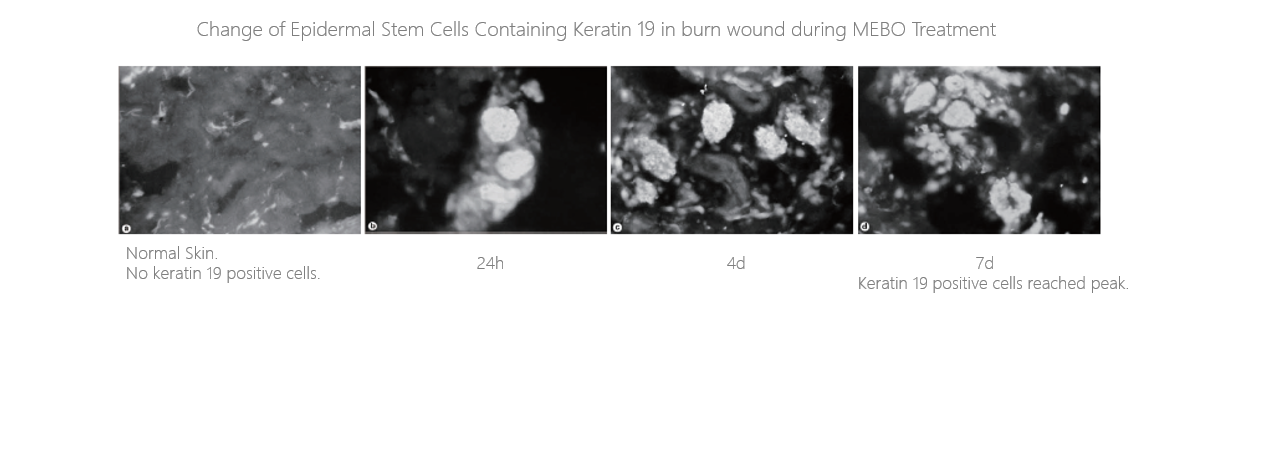
Stimulate in situ skin regeneration after MEBO Ointment treatment, through increased growth factors and activation of epidermal stem cells.
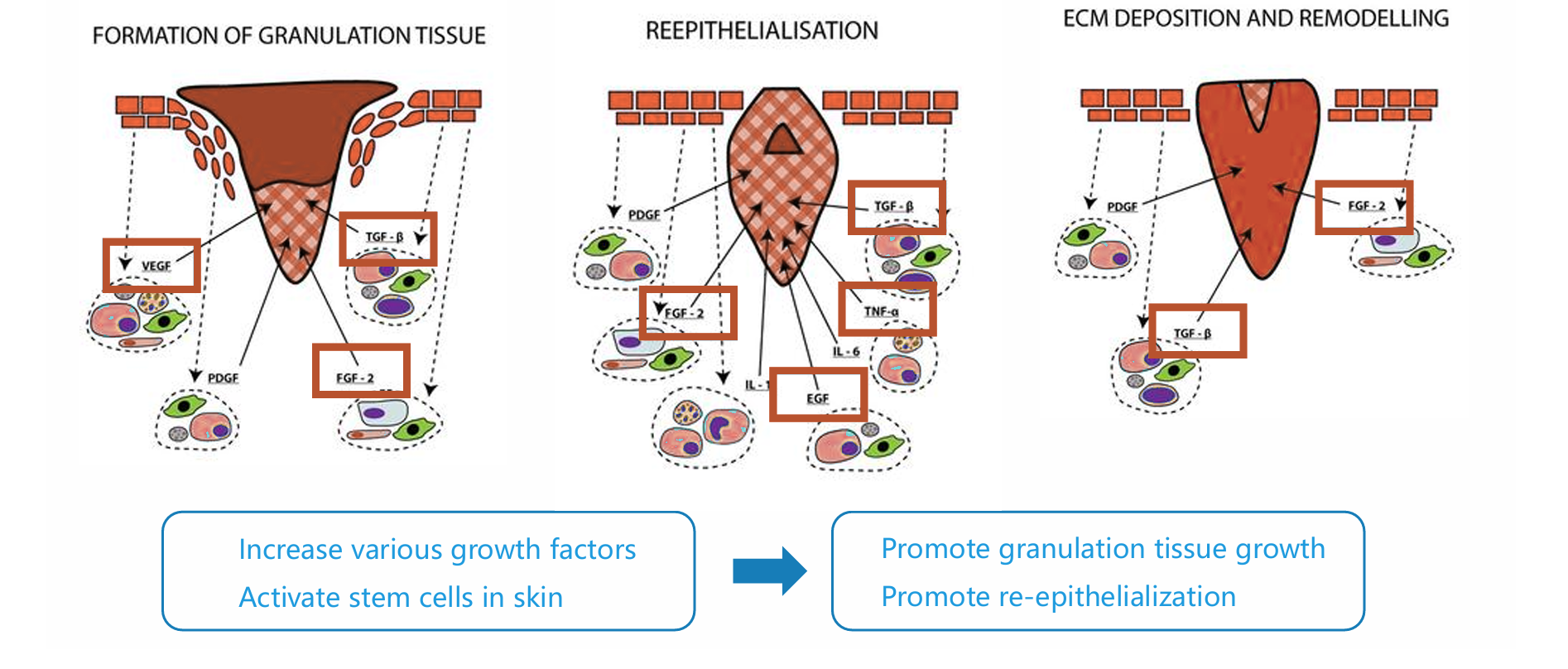
Epidermal stem cells containing keratin can proliferate and differentiate into skin tissues of all layers.
In acute wounds, RMT provides the physiological conditions that keep the repair cascade on track.
In chronic wounds, it reactivates the stalled programme by stimulating stem cells and restoring the wound microenvironment.
Explore the Product
Learn the details of MEBO Ointment: presentation, indications, mode of use, and safety information.
View MEBO Ointment